H-1B Premium Processing Fee - How much does it cost?
10 mins read | Jan 20, 2026
KNOW HOW TO SUBMIT THE MOST COMPETITIVE, COMPETENT APPLICATION POSSIBLE
Contributor
Tukki
Reading time
7 mins read
Date published
Oct 31, 2024
The allure of obtaining a US green card and its benefits attract millions per year—but few are issued each 12 months. With overwhelming demand according to 2023 data, the first step to a green card needs to be knowing how to submit the most competitive, competent application possible.
You likely know that submitting a green card application can lead to permanent residency, the ability to work, and the pathway to citizenship—this coveted permanent residency status is known as a green card. In this article, we’ll focus on the what you need to know about obtaining the ability to live and work permanently in the US. Visit our blog on nonimmigrant visas for more on temporary residency permissions.
Diving into the reason you’re here, below is a list of the bare minimum you need to gather and do, in order to apply for a US green card.
More criteria apply that are specific to different types of green card, as follows.
Getting a US green card is a long process and it can be confusing to figure out which type of green card is right for you, to know where to start. We broke down the main types of green cards, focusing on those based on family connections, employment, and a handful of other unique situations.
Family-based green cards are among the most common ways to gain US residency. These are generally split into two groups: immediate relatives and family preference categories.
If you’re looking to stay in the US through your business, investment, or profession, employment-based green cards are your best bet. These are split into several preference categories, depending on the type of job or level of expertise you have.
The Diversity Visa (DV) Lottery, or Green Card Lottery, is a unique program aimed at increasing the diversity of immigrants in the US Each year, 50,000 diversity visas are awarded to individuals from countries with low immigration rates to the UUS
Beyond the common family-based and employment-based green cards, there are a few other categories for special situations:
Getting a green card is a big deal, but knowing which type is right for you makes the process smoother. Whether you’re relying on family ties, a job offer, or a unique circumstance, there’s likely a path that fits your situation. Keep these categories in mind as you plan your journey toward permanent residency in the US.
Here’s an overview of the steps you’ll need to follow to apply for a US green card. Note that these petitions are particularly difficult to file successfully without a lawyer or immigration technology.
Interviews at the consulate may be required for all applicants. Note that USCIS sometimes waives the interview for adjustment of status processes.
These are the logistics you’ll need to go through. We’ve kept it as simple as possible to help you prepare for the process. Approach it with patience. Wondering how you can increase your US green card chances?
Follow this advice for a smooth US green card application.
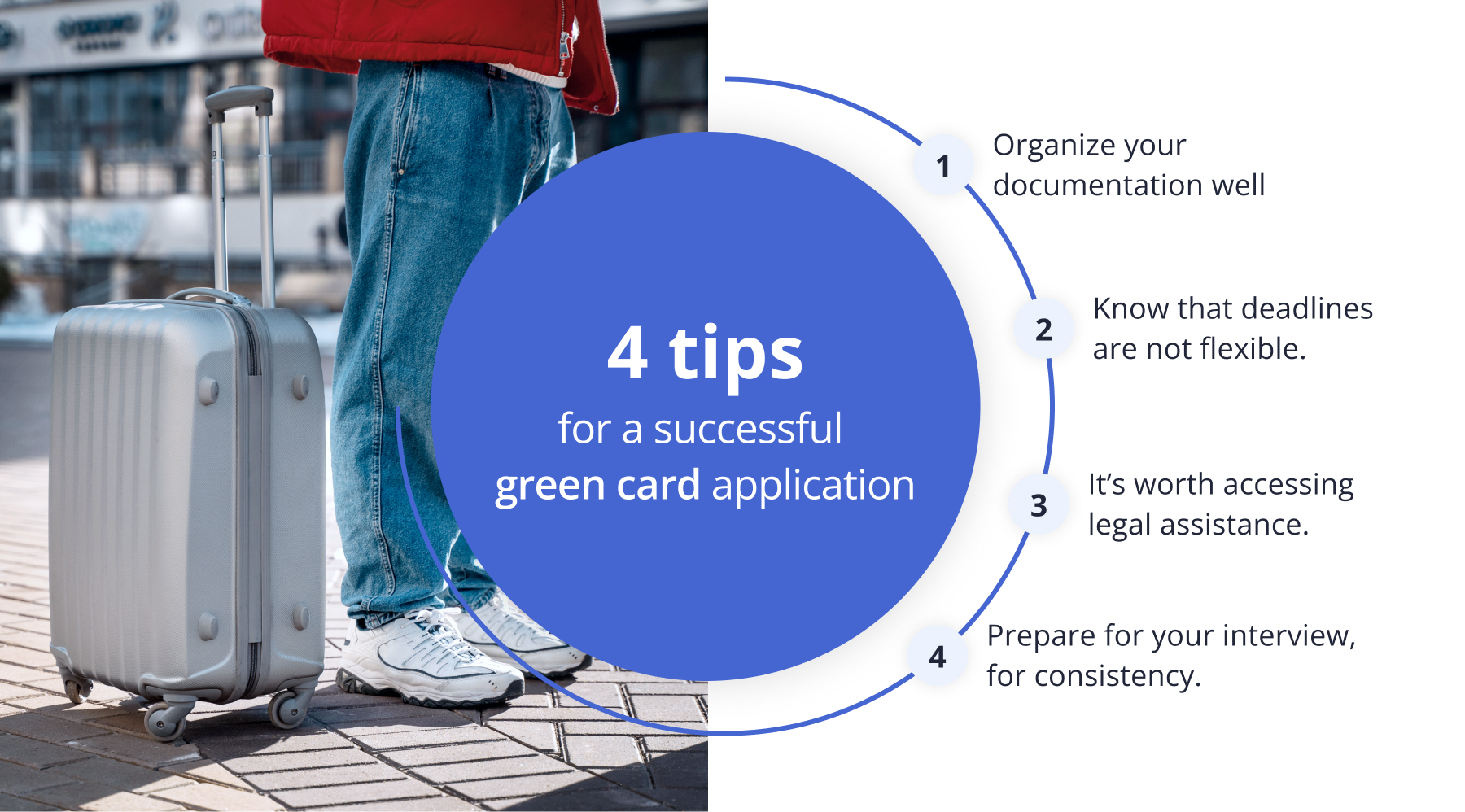
While the process can be challenging, proper preparation and understanding will keep the anxiety at bay, as will knowing what’s happening at every point in the process. That’s achievable with the right US immigration services, lawyers, and technology.
Contact us for personalized guidance on your US green card.
WE CAN HELP
Need more clarity?
Find quick answers to frequent visa questions from our legal experts
Is O-1A easier to get than EB-1A?
Generally, yes.
Both visas require proving extraordinary ability using similar criteria, but USCIS applies a more flexible standard for O-1A. Regional recognition and recent accomplishments tend to carry more weight for O-1A, while EB-1A requires sustained national or international acclaim over a longer period.
Many individuals who qualify for O-1A need additional time and achievements before being ready to apply for EB-1A.
Do I need a job offer or employer sponsorship for an EB-2 NIW?
No, one of the main advantages of the EB-2 NIW is that you can self-petition, meaning you do not need a U.S. employer to sponsor you or go through the labor certification (PERM) process, which is typically a lengthy and complex requirement for employer-sponsored Green Cards.
Instead, you must prove that your work is in the national interest of the U.S. and that waiving the job offer requirement would benefit the country.
Can my family members get green cards if I do?
Yes. Your spouse and unmarried children under 21 can usually apply as dependents (known as “derivative beneficiaries”) when you apply for your green card.
Can I apply for a green card while on a student visa (F-1)?
Yes, but it depends on your situation. Some students transition to a work visa (like O-1 or H-1B) and later to a green card.
Others may qualify directly for categories like EB-1 or marriage-based green cards.
Keep in mind that the F-1 visa does not allow “dual intent,” so timing and strategy are very important.
What are the total costs of US immigration including legal fees, USCIS fees and any other payments?
The total cost for US immigration varies depending on the type of visa and the number of applicants. On average, the all-inclusive cost ranges from $10,000 to $15,000 for a work visa and from $14,000 to $20,000 for a green card.
For a family of four, the cost might range from $10,000 to $15,000 for a work visa and from $14,000 to $30,000 for a green card.
To know the specific cost of your visa or green card application, consult our visa pricing calculator.
Other blogs for every step of your visa journey