Your immigration forms - what each one is for and what to check before you sign
9 mins read | Oct 13, 2026
EVERYTHING YOU NEED TO KNOW ABOUT THE IMMIGRANT PETITION
Contributor
Tukki
Reading time
8 mins read
Date published
Mar 6, 2026
Form I-140 is officially called the Immigrant Petition for Alien Workers and is one crucial step in any employment-based green card process. It's the petition that establishes your eligibility for a permanent position in the United States based on your skills, education, or extraordinary achievements.
Whether your employer is sponsoring you or you're filing on your own through a self-petition category, understanding how Form I-140 works will help you plan your timeline, budget, and next steps. This guide covers the I-140 filing fee, eligibility categories, premium processing options and what happens after approval.
Form I-140 is the form used to file a petition with USCIS (U.S. Citizenship and Immigration Services) to classify a foreign national for an employment-based green card. Think of it as some sort of gateway between a temporary work visa and permanent residence in the country. Without an approved I-140, you can't move forward with adjustment of status or consular processing.
In most cases, the employer acts as the petitioner and files the Form I-140 on behalf of the worker (the beneficiary). However, there are two categories that allow self-petitioning, meaning you can file on your own without an employer:
For all other categories, the employer must file the petition. Also, note that many of these categories also require an approved PERM labor certification before the I-140 can be submitted.
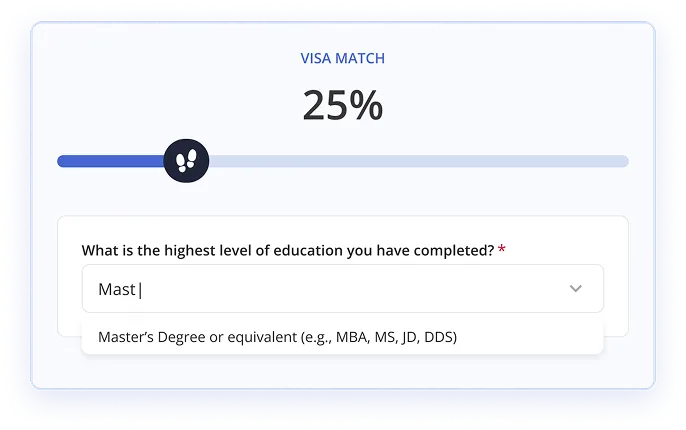
If you're unsure which category fits your background, Tukki's Visa Match tool can help you compare options side by side.
USCIS groups employment-based immigration into several preference categories. Each has its own visa requirements and choosing the right one depends on your qualifications, work history and whether you have employer sponsorship.
| Category | Who qualifies | Petitioner | Labor certification required? |
|---|---|---|---|
| EB-1A | Individuals with extraordinary ability in sciences, arts, education, business, or athletics | Self-petition | No |
| EB-1B | Outstanding professors and researchers with 3+ years of experience and a permanent job offer | Employer | No |
| EB-1C | Multinational managers or executives who worked abroad 1+ year in the past 3 years | Employer | No |
| EB-2 PERM | Professionals with an advanced degree or exceptional ability | Employer | Yes (PERM) |
| EB-2 NIW | Professionals whose work serves the national interest | Self-petition | No |
| EB-3 | Professionals, skilled workers, or other workers | Employer | Yes (PERM) |
The EB-1 tier is reserved for top-level talent. Among all of them, the EB-1A (Extraordinary Ability) is the most flexible because it lets you self-petition without a job offer or labor certification, although that doesn't mean that it's the easiest to get. You'll need to demonstrate sustained national or international acclaim through evidence like awards, publications or significant contributions to your field.
EB-1B is reserved for outstanding professors and researchers. The petition is filed by the employer, and the candidate must have at least three years of experience in their academic field, along with a permanent job offer for a tenure-track or comparable research position.
EB-1C, by contrast, is intended for multinational managers and executives transferring to a U.S. office. The employer also files the petition, and the candidate must have worked abroad for the company (or an affiliated entity) for at least one year within the previous three years.
EB-2 PERM requires employer sponsorship and an approved PERM labor certification, which proves that no qualified U.S. worker is available for the role. The beneficiary must hold an advanced degree or demonstrate exceptional ability in their field.
The EB-2 NIW (National Interest Waiver) is a popular self-petition option. It removes the need for both an employer sponsor and a labor certification. Instead, you must show that your work has substantial merit, that you're well-positioned to advance the proposed endeavor, and that it would benefit the United States to waive the usual job offer requirement.
EB-3 covers professionals with a bachelor's degree, skilled workers with at least two years of training or experience, and other workers in unskilled positions. Like EB-2 PERM, this category requires both employer sponsorship and an approved PERM labor certification.
The total cost of your I-140 filing fee depends on your employer's size due to the Asylum Program Fee, which USCIS collects alongside most employment-based petitions.
| Fee component | Large employer (26+ FTE) | Small employer (25 or fewer FTE) | Nonprofit |
|---|---|---|---|
| Base filing fee | $715 | $715 | $715 |
| Asylum Program Fee | $600 | $300 | $0 |
| Total I-140 filing fee | $1,315 | $1,015 | $715 |
One important detail: the base filing fee and the Asylum Program Fee must be submitted as two separate payments. USCIS will reject the petition if you combine them into a single payment. You can verify the exact fees for your situation using the USCIS fee calculator.
These costs don't include premium processing, which carries its own separate fee if you choose to expedite your case.
Standard I-140 processing time typically runs 6 to 12 months or longer depending on the service center and your category. If you need a faster decision, you can file Form I-907 to request premium processing. USCIS guarantees a response within a set number of business days, though that response could be an approval, denial or request for evidence.
The I-140 premium processing fee is changing in 2026:
| Effective date | I-140 premium processing fee |
|---|---|
| Before March 1, 2026 | $2,805 |
| On or after March 1, 2026 | $2,965 |
Premium processing timelines vary by category:
| Category | I-140 premium processing time |
|---|---|
| EB-1A (Extraordinary Ability) | 15 business days |
| EB-1B (Outstanding Professors/Researchers) | 15 business days |
| EB-2 PERM (Advanced Degree/Exceptional Ability) | 15 business days |
| EB-3 (Professionals/Skilled Workers) | 15 business days |
| EB-1C (Multinational Managers/Executives) | 45 business days |
| EB-2 NIW (National Interest Waiver) | 45 business days |
Keep in mind that the premium processing fee is separate from the base I-140 filing fee and Asylum Program Fee. For a deeper look at how premium processing works across all USCIS forms, see our guide to USCIS premium processing.
See Tukki's pricing and timelines
After filing, you can track your I-140 status using the receipt number on your Form I-797 notice. USCIS provides an online case status tool, and you can also sign up for automatic email or text updates when your case moves to a new stage.
If you filed with premium processing and haven't received a decision within the guaranteed timeframe, you can contact USCIS to inquire about the delay. For standard processing, check current estimated wait times on the USCIS processing times page to see how your case compares.
Your immigration attorney or immigration services provider can also help monitor your case and respond quickly to any requests for evidence (RFEs) that USCIS may issue.
An approved Form I-140 doesn't give you a green card on its own. It establishes your priority date, which is your place in line for an employment-based green card. Your priority date is typically the date your PERM labor certification was filed, or the date USCIS received your I-140 if no PERM was required.
Once your priority date is current (meaning a visa number is available for your country and category), you can take the next step:
The filing address for Form I-140 varies depending on your eligibility category and geographic location. Always check the latest USCIS I-140 filing instructions before mailing your petition, as addresses can change without notice.
WE CAN HELP
Need more clarity?
Find quick answers to frequent visa questions from our legal experts
How long is an L-1 blanket petition valid?
USCIS initially approves blanket petitions for three years.
After that, you can renew the blanket indefinitely as long as your organization continues to meet the eligibility requirements.
The blanket covers future transfers, so you don't need to refile the organizational petition each time you move a new employee.
How do I check how long I can stay in the U.S. on my tourist visa?
Visit i94.cbp.dhs.gov and look up your most recent I-94 record. The "admit until" date is your departure deadline.
Always verify your I-94 after every entry because passport stamps can be inaccurate and the electronic record is what CBP and USCIS treat as official.
Does switching immigration attorneys restart my petition?
No, switching attorneys does not restart your petition. Your filing date, receipt number, priority date, and any evidence already submitted all stay in place.
Changing counsel is a representation change, not a new application, so your position in the queue is unaffected.
Can I claim multiple roles at the same company?
Yes, especially if the roles reflect meaningful changes in scope. Each role can be supported with its own letter and evidence. What matters is that each role was critical and the company was distinguished during that period.
Can a whole team use the P-1 visa?
Yes, and this is a key advantage of the P-1A over the O-1. When a team is internationally recognized, it can be petitioned as a unit, so the roster travels on the same classification for up to 1 year at a time.
The O-1A has no team version, since it evaluates each individual's extraordinary ability separately, so a full squad would need a separate O-1A case per athlete.
Other blogs for every step of your visa journey
Your immigration forms - what each one is for and what to check before you sign
9 mins read | Oct 13, 2026
How to write an RFE response letter and organize the evidence behind it
9 mins read | Oct 12, 2026
Laying off a sponsored employee on H-1B: what the company owes and what the employee has left
8 mins read | Oct 9, 2026