Your immigration forms - what each one is for and what to check before you sign
9 mins read | Oct 13, 2026
WHAT A FIRM CAN PROMISE
Contributor
Tukki
Reading time
6 mins read
Date published
Jul 24, 2026
There's no guarantee that your immigration RFE will be approved, because the decision belongs to USCIS, not to any attorney or firm.
What a firm can stand behind is its work: the scope it commits to, whether an RFE response is included in the fee, transparent pricing, and an honest read on whether your case is ready. If you have seen a competitor advertise an "RFE guarantee" or a "money-back guarantee," the short version is that these promises almost always cover fees or re-work, not the immigration outcome. This piece answers the questions people actually ask on a sales call, so you can tell a meaningful promise from a marketing line.
No. No immigration lawyer can guarantee that your visa or green card will be approved, because approval is a discretionary decision made by USCIS based on the law and the evidence in your file.
An attorney can build a strong case and improve your odds, but the final call sits with a government adjudicator who applies the same legal standard to every petition. Anyone who promises a guaranteed approval is making a claim they have no authority to keep, and most bar ethics rules treat a guaranteed-result promise as a red flag. A reputable firm guarantees effort and scope, the work it will do and how thoroughly, rather than a result it does not control.
An RFE, or Request for Evidence, is a normal request from USCIS for more documentation, not a denial. When an officer finds the record incomplete or unclear on a specific point, USCIS issues an RFE that names what is missing and gives you a deadline to respond. You supply the evidence, the officer reviews the fuller file, and the case moves toward a decision. Getting an RFE means the case is still open and being decided, which is very different from a denial.
The fear of an RFE usually comes from confusing it with the two worse outcomes, so it helps to see all three side by side.
| USCIS action | What it means | How worried to be |
|---|---|---|
| RFE (Request for Evidence) | Officer wants more proof on a specific point before deciding | A hurdle, not a verdict |
| NOID (Notice of Intent to Deny) | Officer is leaning toward denial but gives you a chance to respond | Serious, still answerable |
| Denial | The petition is refused | The decision, subject to appeal or refiling |
A strong RFE response often turns a wobbly case into an approval, which is exactly why so many firms advertise around it. For why RFEs happen and how to respond, see our guide on the USCIS Request for Evidence and our breakdown of how long USCIS takes to respond to an RFE.
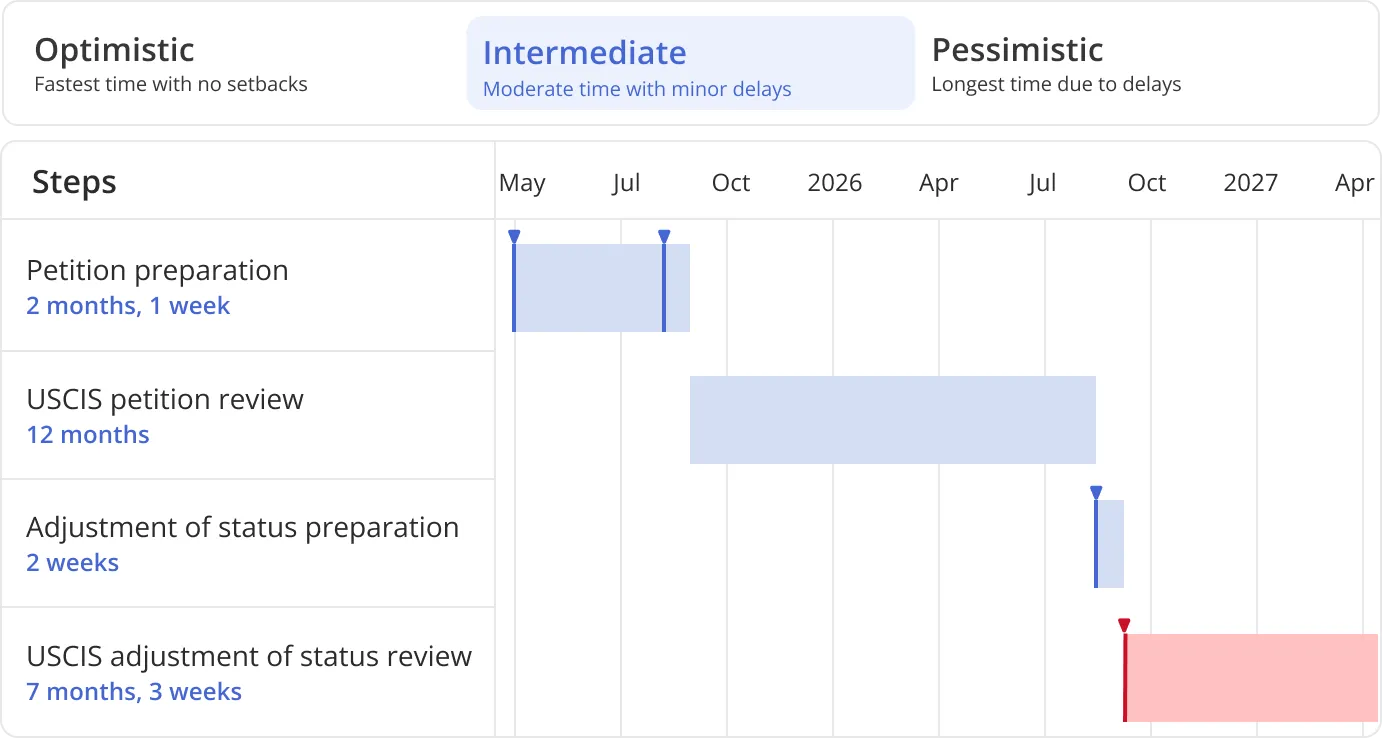
A firm can legitimately promise clear scope, an RFE response included in the fee, transparent pricing with no hidden costs, and an honest assessment of whether you are ready to file. These are the things inside a firm's control, and the ones worth comparing. Scope means a written list of what the fee covers, from strategy and evidence-gathering through filing and any RFE response. Transparent pricing means one number you can plan around, with government filing fees stated up front rather than surfacing later as surprise line items.
The most valuable promise often sounds least like a sales pitch: an honest "you are not ready yet." A firm that tells you your evidence is thin, or that a different category fits your profile better, is protecting you from filing a case that leads to an RFE or a denial. That candor changes your odds before USCIS ever sees your file. To see how legal fees are typically structured, our post on how much an immigration lawyer costs breaks down the common pricing models.
Read a money-back immigration guarantee by asking exactly what triggers the refund, what amount comes back, and what is excluded, before you sign anything. The phrase carries no fixed meaning, so the value lives entirely in the terms. Get clear answers to these questions in writing:
A promise you can hold someone to names the trigger, the amount, and the exclusions. A promise that stays vague under questioning is a marketing line, and the honest move is to treat it that way.
Tukki does not guarantee approvals, because no one honestly can, and instead stands behind scope, price, and candor. The RFE response your case needs is included in the fee, so an RFE does not turn into a surprise bill. Pricing is one end number that already folds in government filing fees, so you plan around a single figure rather than discovering costs partway through. You can see how each step and its cost fit together on our process page.
The part that changes your odds happens before filing: an honest candidacy assessment. If your profile is not ready, or a different visa or green card category fits you better, our attorneys tell you up front rather than filing a weak case and billing you for the RFE later. That honest read, paired with transparent pricing, is the real counter to a gimmicky guarantee.
Tukki is a U.S. immigration provider that helps skilled professionals and their employers with work visas and green cards, from H-1B and O-1A to EB-1A and EB-2 NIW, with dedicated attorney support, RFE responses included in scope, and transparent pricing. If you want a straight answer on whether your case is ready and what it will cost, start with our pricing.
WE CAN HELP
Need more clarity?
Find quick answers to frequent visa questions from our legal experts
Can I switch from NIW to EB-1A after a denial?
You can, but only if your profile genuinely fits the EB-1A's higher standard of top-of-field extraordinary ability. If your National Interest Waiver was denied because your achievements were seen as strong but not exceptional, the EB-1A's tougher bar may not help.
If your record reflects genuine top-of-field standing that the NIW framing missed, it can be a stronger home for your case.
What compliance records can immigration software hold?
Typically Form I-9 records, E-Verify case records where the employer is enrolled, LCA documentation including notice of filing dates and the public access file for H-1B employees, prior approval notices, and the supporting documents for each petition.
These record sets carry different retention rules, so the useful question is whether the system tracks retention and removal dates rather than simply storing files.
Can you send new documents with an RFE response?
Yes, where they prove eligibility as it stood on the filing date. Under 8 CFR 103.2(b)(1) eligibility is established at the time of filing and must continue through adjudication, and 8 CFR 103.2(b)(12) denies a request where the response does not establish eligibility at the time of filing.
Can the employee pay any of the sponsorship fees?
Not on the H-1B or PERM legs. The ACWIA training fee and the Fraud Prevention and Detection Fee are the employer's, and 20 CFR 655.731 prohibits arrangements that recover them from the employee's wage. Under 20 CFR 656.12(b) the employee may not pay or reimburse PERM costs at all.
At the I-140 and I-485 stage, who pays is a company policy decision.
Do L-1B visa holders qualify for EB-1C?
No. The EB-1C category is specifically for multinational managers and executives, which aligns with the L-1A classification.
L-1B holders, who qualify based on specialized knowledge, typically pursue green cards through EB-2 or EB-3, both of which require PERM labor certification and often have longer wait times.
Other blogs for every step of your visa journey
Your immigration forms - what each one is for and what to check before you sign
9 mins read | Oct 13, 2026
How to write an RFE response letter and organize the evidence behind it
9 mins read | Oct 12, 2026
Laying off a sponsored employee on H-1B: what the company owes and what the employee has left
8 mins read | Oct 9, 2026